






Robert Coleman
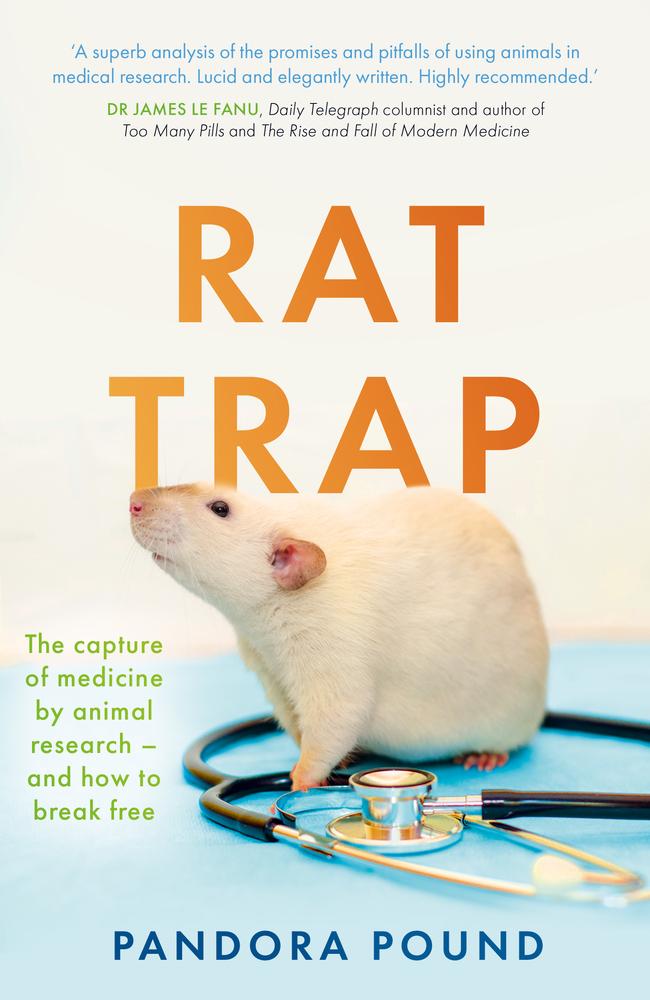
This highly readable book by Dr Pandora Pound unveils the woeful shortcomings of current approaches to discovering and developing new medicines for human diseases. It is hard to read without being shocked by the apparent willingness of expert scientists to waste not just of billions of pounds, but also of millions of animals' lives in the face of ever-repeated failure. This financial and ethical horror is supported by the experts' claim that, although unfortunate, experiments on animals are critical to bringing new medicines to the market, a claim lacking any validation beyond "trust me I'm an expert". This stance is comprehensively deconstructed by Dr Pound. She argues that laboratory animals are not human, and no amount of genetic or other tinkering could ever convert mouse to man. Importantly, she goes on to present examples of the impressive range of elegant alternative techniques involving human biology that provide a potentially cheaper, and decidedly more rational and ethical approach. This she follows with possible suggestions as to why the industry persists with ethically-questionable, unreliable methods when superior methods are available. Her conclusions do not reflect well on the experts and opinion leaders in the industry. The book's focus on evolution I found a particularly powerful argument against the simplistic belief that animal species are all much the same under the skin. I don't see how anyone could read this book and continue to believe that animal models provide any sort of robust predictive value for humans and our diseases. I admit to being one who originally totally bought into the essential nature of animal approaches, however my convictions were steadily and completely eroded by experience. This book should be compulsory reading for investigators, regulators, politicians and members of the public with interests in the quality of medicines for human health. But be warned, reading this book could make you angry.
